
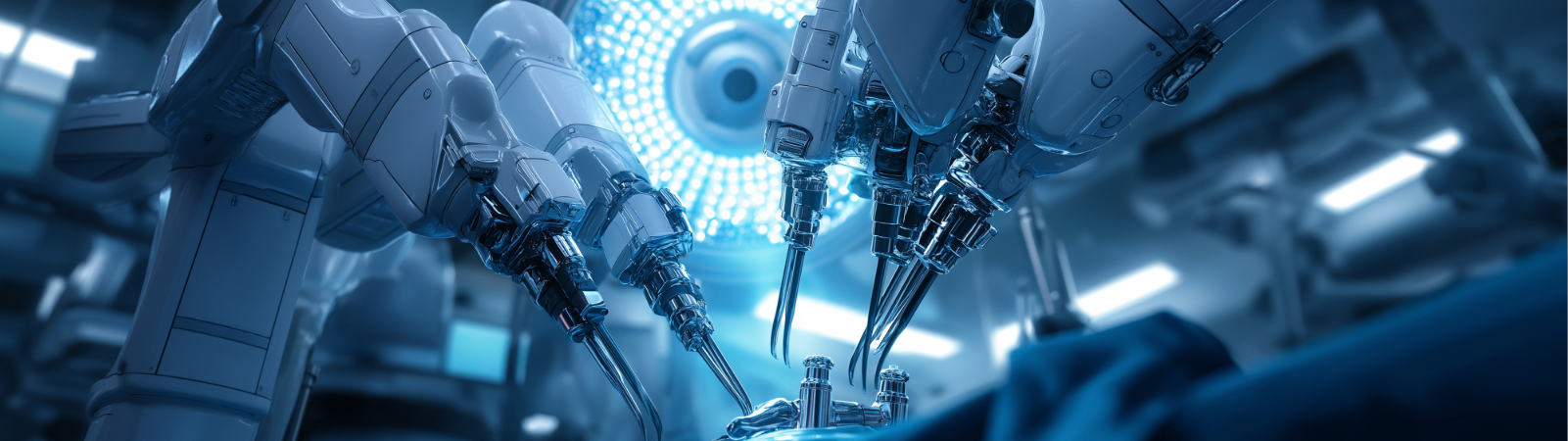

Robotics and artificial intelligence (AI) are redefining the way orthopedic surgery is performed, allowing doctors to work with greater accuracy and helping reduce complications. AI and robotic systems now support doctors in planning surgeries, guiding tools, diagnosing problems, and training medical professionals, giving surgeons at all levels greater precision and confidence.
In recent years, orthopedics has seen significant advancements in robotic surgery, image guidance, and AI-based predictions. AI helps identify the best treatments, reduce complications, and improve accuracy in complex procedures when used with robotics.
Orthopedic Surgeon Dr. S.S. Sathappan discusses how AI, robotics, and 3D printing are transforming the field of orthopedic surgery.
Orthopedic surgeries rely strongly on precision. In the past, traditional surgery often relied on a surgeon’s judgement alone, which may lead to variations in results. In contrast, AI and robotic systems use advanced imaging and mapping technologies to ensure precise alignment of implants during surgery.
Real-time feedback from robotic systems also enables surgeons to make necessary adjustments during the procedure. This includes critical soft tissue balancing, or the management of tension in ligaments and tendons to ensure stable, symmetrical, and pain-free joint movement.
Among the elderly, total knee replacement and hip replacement are among the most common orthopedic procedures performed. As people live longer and wish to stay active well into their 70s or 80s, the hope is for orthopedic treatment options to not only relieve their pain but also allow them to walk, travel, or play sports.
“It’s not just about replacing the joint or fixing this and that and letting you carry on with your sedentary life,” Dr. Sathappan notes. “It’s about catering to your lifestyle. Patients don’t just want pain relief – they want to ski, play pickleball, or even travel the world after surgery.”
This is where AI and robotics play an important role by improving precision, allowing surgeons to deliver good, predictable, reproducible, and long-term results.
3D printing technology allows orthopedic implants to be custom-made for each patient, perfectly tailored to each individual’s anatomy. These implants not only help reduce surgical time but also improve the overall success rate of procedures.
Studies have shown that custom-fit implants demonstrate a 90% success rate in achieving optimal reconstruction with minimal complications and help to reduce surgical time by 30%.
“It’s like you are wearing a shirt that is custom-made for you,” Dr. Sathappan explains. “It will fit you better than something you get off the rack.”
He adds, “About 60% of people will have no problem with the implant’s fit. But there will also always be about 20%–40% of patients where [the implants] could fit a little better.”
Over the decades, robotic-assisted surgeries have transitioned from science fiction to standard practice in orthopedics, and now offer surgeons high levels of precision and control in minimally invasive procedures.
Dr. Sathappan clarified that when it comes to robotic surgery, the robots are not the ones performing the surgery.
“I’ll tell my patients that [the machine] is basically a high definition cutting tool, giving you biofeedback on what you’re cutting,” Dr. Sathappan explains. Instead of being an autonomous system, the robot serves as an assistive tool to enhance precision and patient safety, but does not replace surgical decision-making.
Although there used to be systems like that, they are no longer used in local practices. Dr. Sathappan shares that it is because robots do not have a 3D perception of the soft tissue structures.
He adds, “[The robot] only knows about the bone structure, so I think surgeons have a very critical role to define that parameter of safety.”
Advancements in orthopedic technology now allow for greater surgical precision, offering patients the following benefits:
Dr. Sathappan notes that the use of 3D printing and AI in orthopedic procedures may result in the cost of surgery going up, but over time, as these tools become more common, the price difference will eventually narrow.
“If you get a new phone, it’s always going to be pricey for the initial first few months,” Dr. Sathappan explains. “But over time, as volume goes up, prices come down.”
Dr. Sathappan says patients are also increasingly requesting for robotic surgery after learning about the positive outcomes experienced by others. They hear positive experiences from friends who underwent robotic surgery, then look into the data, and note the good, long-term outcomes of these surgeries. Now they are also coming in and asking for robotic surgeries themselves.
“Initially, people were skeptical of robotic surgery because they assumed that robots were the ones operating on them and they did not want that,” he says. “But now, more people are trusting that the systems are used as assistive tools and are not doing the actual surgery.”
As AI, robotics, and 3D printing continue to evolve, orthopedic surgery is moving towards a future that is increasingly personalised, precise, and patient-centered. Procedures that once relied heavily on estimation and manual techniques are now supported by technologies that allow surgeons to plan and perform operations with remarkable accuracy.
For patients, this shift means more than just improved surgical outcomes. It represents the possibility of maintaining independence, mobility, and quality of life well into older age. As innovation continues to advance, the future of orthopedic care will not simply be about treating pain or repairing joints, but helping people return confidently to the activities that matter most to them.