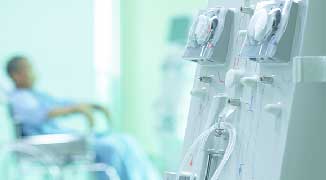
Kidney disease is one of the most demanding conditions a patient can live with — not because of a single acute event, but because of what it asks of you week after week, year after year. Dialysis is a commitment that runs through daily life, and the environment and team providing it matter in ways that go beyond the clinical.
Farrer Park Hospital's Dialysis Centre on Level 10 provides comprehensive renal replacement therapy for patients with acute and chronic kidney conditions, led by Dr. Yang Wen Shin — a nephrologist with specialist expertise in kidney dialysis and renal transplantation. The centre offers haemodialysis (acute and chronic), haemodiafiltration, liver dialysis, and therapeutic plasma exchange, with extended hours across six days a week to accommodate the scheduling demands of regular dialysis patients.
Whether you are newly diagnosed with end-stage renal disease and exploring dialysis options, an existing patient seeking to transfer your care, or a patient with a condition requiring a specialist form of extracorporeal therapy, this page explains what the centre provides and how to begin.
The kidneys perform critical functions that the body cannot manage without: removing waste products and excess fluid from the blood, regulating electrolyte balance, controlling blood pressure, and producing hormones involved in red blood cell production and bone health. When kidneys fail — whether suddenly (acute kidney injury) or progressively over years (chronic kidney disease) — these functions are lost and must be replaced artificially.
Dialysis is renal replacement therapy: a set of techniques that perform the blood-cleaning and fluid-removal functions of failed kidneys, outside the body. It does not treat the underlying kidney disease or restore kidney function; it sustains life and maintains metabolic balance when the kidneys can no longer do so themselves.
Chronic kidney disease (CKD) progresses through five stages, measured by the glomerular filtration rate (GFR) — the rate at which the kidneys filter blood. Dialysis is not typically started until stage 5, when kidney function has fallen below 15 mL/min/1.73m². At this stage, the symptoms of uraemia — fatigue, nausea, fluid retention, breathlessness, and confusion — become clinically significant and life-threatening without intervention.
| Stage | GFR (mL/min/1.73m²) | Description | Dialysis |
|---|---|---|---|
| 1 | ≥90 | Kidney damage with normal or high function | No |
| 2 | 60-89 | Mild reduction in function | No |
| 3a | 45-59 | Mild to moderate reduction | No |
| 3b | 30-44 | Moderate to severe reduction | No |
| 4 | 15-29 | Severe reduction — preparation for renal replacement therapy | Preparation |
| 5 | <15 | Kidney failure — renal replacement therapy required | Yes |
The decision to start dialysis is made by the nephrologist in consultation with the patient, based not only on GFR but on the patient's symptoms, nutritional status, fluid balance, and overall clinical condition. Some patients are initiated earlier than stage 5 when clinical deterioration is rapid; others with few symptoms may be managed conservatively at stage 5 for a period.
Acute kidney injury (AKI) is a sudden loss of kidney function, typically developing over hours to days. Causes include severe infection (sepsis), dehydration, medication toxicity, cardiac failure, and obstruction of urine flow. AKI can be reversible with treatment of the underlying cause — but in severe cases, temporary dialysis is required to manage the metabolic consequences while recovery occurs.
The Farrer Park Hospital Dialysis Centre provides four distinct services, each addressing a specific clinical indication. The appropriate therapy is determined by the nephrologist based on the patient's diagnosis, medical condition, and treatment goals.
How it works: During haemodialysis, blood is drawn from the patient through a vascular access point (a fistula, graft, or central venous catheter), passed through a dialyser — an artificial kidney membrane — where waste products and excess fluid are removed by diffusion into a dialysate solution, and returned to the patient. The dialyser contains thousands of hollow fibres with semi-permeable membranes that mimic the filtration function of the kidney glomerulus. Each session clears accumulated uraemic toxins and excess fluid that have built up since the previous session.
Used for: Acute haemodialysis is used for acute kidney injury requiring temporary renal replacement — patients in ICU or step-down settings with haemodynamic stability sufficient for intermittent haemodialysis. Chronic haemodialysis is the long-term, ongoing treatment for end-stage renal disease (ESRD), typically prescribed three times per week, each session lasting 3.5–5 hours.
What to expect: Patients are seated or reclined in a dialysis chair for the duration of the session. Vascular access is established at the start of each session. Most patients can read, watch television, or use a phone during treatment. Sessions are monitored by trained dialysis nurses throughout, with vital signs checked regularly. The centre's extended hours (7am–10pm) allow morning, afternoon, and evening session scheduling across a six-day week.
How it works: Haemodiafiltration combines the standard diffusion process of haemodialysis with convective transport — large volumes of sterile substitution fluid are infused into the blood circuit, driving a high-volume fluid exchange that removes larger-molecule uraemic toxins that diffusion alone does not clear effectively. These middle molecules — beta-2 microglobulin, inflammatory cytokines, and other proteins — accumulate in long-term dialysis patients and are associated with dialysis-related complications including amyloidosis, cardiovascular disease, and inflammation.
Used for: Chronic dialysis patients who are clinically stable but experiencing symptoms or complications associated with accumulation of middle molecules; patients with dialysis-related amyloidosis; patients where superior toxin clearance is the clinical priority; haemodynamically stable patients requiring high-efficiency renal replacement therapy.
What to expect: The procedure is similar to standard haemodialysis from the patient's perspective — same vascular access, same session duration, same monitoring. The dialysis machine operates in haemodiafiltration mode, managing the substitution fluid infusion automatically. HDF requires high-purity water and dialysate of the highest bacteriological standard to prevent contamination during the infusion phase.
How it works: Liver dialysis is a form of extracorporeal liver support that removes albumin-bound toxins — bilirubin, bile acids, aromatic amino acids, and inflammatory mediators — that the failing liver can no longer process and that standard kidney dialysis cannot remove (these toxins bind to albumin and do not pass through standard dialysis membranes). Systems such as MARS (Molecular Adsorbent Recirculating System) circulate the patient's blood through an albumin-containing circuit with adsorption columns that capture and remove these toxins, stabilising the patient's neurological and systemic condition.
Used for: Acute liver failure — from viral hepatitis, drug toxicity, or other causes — where the liver has lost function suddenly and hepatic encephalopathy or coagulopathy is developing. Acute-on-chronic liver failure in patients with underlying cirrhosis who have an acute decompensation. As a bridging therapy to liver transplantation or to spontaneous liver recovery in patients whose liver may regenerate with time and support.
What to expect: Liver dialysis sessions are typically 6–8 hours in duration and are performed in a clinical setting with close nursing and medical supervision. The procedure is not uncomfortable, but patients with hepatic encephalopathy may be confused or drowsy and require additional monitoring and safety precautions during treatment.
How it works: Therapeutic plasma exchange separates blood into its cellular components (red cells, white cells, platelets) and plasma using a centrifuge or membrane separation. The patient's own plasma — which contains the harmful substance being targeted — is discarded and replaced with donor plasma, albumin solution, or a combination. The reconstituted blood is returned to the patient. TPE removes large molecular weight substances that cannot be cleared by standard dialysis or haemodiafiltration — autoantibodies, immune complexes, paraproteins, toxins, and certain inflammatory mediators.
Used for: Autoimmune conditions requiring autoantibody removal — myasthenia gravis crisis, Guillain-Barré syndrome, anti-GBM (Goodpasture's) disease, ANCA vasculitis, neuromyelitis optica; thrombotic thrombocytopenic purpura (TTP — TPE is the primary treatment); hyperviscosity syndrome from paraproteinaemia (multiple myeloma, Waldenström's macroglobulinaemia); certain drug toxicities and poisonings where the toxin is plasma-bound.
What to expect: Sessions typically take 2–4 hours, depending on the volume of plasma to be exchanged. Vascular access requirements vary — peripheral IV access is sufficient for some systems; central venous access may be required for others. Side effects include hypocalcaemia (from citrate anticoagulation in donor plasma), allergic reactions to replacement fluids, and transient haemodynamic changes. Patients are monitored throughout the session.
Dialysis becomes necessary when kidney function falls below the threshold at which life can be maintained without renal replacement therapy. In Singapore, as across much of Southeast Asia, the most common causes of end-stage renal disease leading to dialysis are:
Longstanding diabetes — both Type 1 and Type 2 — causes progressive damage to the glomerular capillaries of the kidney. It is the leading cause of ESRD in Singapore, accounting for approximately 60% of new dialysis patients. Tight glycaemic and blood pressure control can significantly slow progression, but cannot always prevent it.
Chronic high blood pressure causes scarring and thickening of the small renal blood vessels, progressively reducing kidney perfusion and filtration capacity. Hypertension is both a cause and a consequence of CKD — the kidneys' failure to regulate fluid and sodium retention worsens hypertension, creating a cycle of progressive damage.
Inflammation of the glomeruli — the kidney's filtering units — caused by autoimmune conditions (IgA nephropathy, lupus nephritis, ANCA vasculitis, membranous nephropathy) or infection. Glomerulonephritis is a significant cause of CKD in younger patients and can progress rapidly without immunosuppressive treatment.
Chronic obstruction of urinary outflow — from an enlarged prostate (BPH), kidney stones, tumours, or structural abnormalities — causes back-pressure on the kidneys, progressively damaging nephrons. This is the overlap between urology and nephrology, and management requires both specialties.
For patients new to dialysis, or patients considering transferring their care to Farrer Park Hospital, this section outlines what the process of establishing and maintaining haemodialysis at the Dialysis Centre involves.
| Initial Consultation | Your specialist reviews your medical history, current kidney function (eGFR, creatinine, urea, electrolytes), comorbidities, medications, and prior investigations. For patients not yet on dialysis, the consultation assesses when dialysis initiation is appropriate and plans ahead for vascular access. For patients transferring from another centre, medical records and access history are reviewed to ensure continuity of care. |
|---|---|
| Access Assessment | If you do not have established vascular access, the nephrology team coordinates referral to vascular surgery for AVF or graft creation. Access planning is scheduled to allow adequate maturation time before your first dialysis session is needed. |
| Dialysis Prescription | Your dialysis prescription — session duration, frequency, dialysate composition, ultrafiltration target, and access type — is individualised based on your residual kidney function, fluid status, nutritional assessment, and clinical condition. The prescription is reviewed regularly and adjusted as your condition changes. |
| First Session | Your first session is longer and more closely supervised, with pre- and post-session blood pressure, weight, and blood monitoring. The dialysis nursing team explains each step. Most patients find the first session manageable; some experience mild symptoms such as headache, nausea, or low blood pressure as the body adjusts to fluid and toxin removal. |
| Ongoing Sessions | Chronic dialysis is typically three sessions per week, each 3.5–5 hours. The Dialysis Centre's extended hours (7am–10pm) allow you to choose session times that fit your schedule across morning, afternoon, and evening slots. Blood tests and clinical review are performed monthly; your adequacy of dialysis (Kt/V) is checked quarterly. |
| Regular Review | Your specialist conducts regular clinical reviews to assess dialysis adequacy, manage complications (anaemia, bone disease, cardiovascular risk, access issues), review medications, and discuss long-term options including transplantation for suitable patients. |
| Transplant Pathway | For eligible patients, kidney transplantation is the preferred long-term treatment for ESRD. Dr. Yang works with transplant surgeons to assess suitability and prepare patients for transplant listing, where appropriate. |
Diet is a significant part of kidney disease management — before and during dialysis. The kidneys normally regulate potassium, phosphate, sodium, and fluid balance; when they fail, dietary intake of these elements must be controlled to prevent dangerous accumulations between dialysis sessions.
Key dietary considerations for dialysis patients
Farrer Park Hospital's Dietetics and Nutrition service provides personalised renal dietary counselling for dialysis patients. A dietitian experienced in renal nutrition can help you understand which foods to limit, how to meet your nutritional needs within those limits, and how to adapt your diet to your cultural food practices.
Address: 1 Farrer Park Station Road #10-01/02 Connexion Singapore 217562
Tel: (65) 6443 4954 / 6735 5592
Email: [email protected]
Operating Hours
Mon-Sat: 7 a.m. – 10 p.m.
We are open on Public Holidays but closed on Sunday.