

It all started during a church service, when homemaker Nancy Lim, who is in her 50s, realized she could not sing her hymns with the same ease as she used to. More signs started popping up as time went on, but it was only after a routine health check revealed a shadow in her chest that Nancy underwent a series of scans and a biopsy before finally learning what exactly was plaguing her this whole time — an esophageal giant leiomyoma.
Esophageal leiomyomas are benign tumors of the esophagus and are rare lesions that constitute less than 1% of esophageal neoplasms. They are known to be slow-growing tumors with low malignant potential. Esophageal leiomyomas rarely cause symptoms when they are smaller than 2cm in diameter. However, leiomyomas may grow larger and that’s when they become more symptomatic.
Although the tumor surrounded her esophagus, it was fortunately benign and Nancy was also spared from dysphagia, acid reflux or difficulty swallowing. However, as the tumor was partially compressing and adherent to her left lung, it resulted in breathing difficulties and instances where Nancy found herself struggling to catch her breath.
Symptoms of esophageal giant leiomyoma are often related to compression of adjacent critical organs in the chest—namely the heart, lungs, and esophagus.
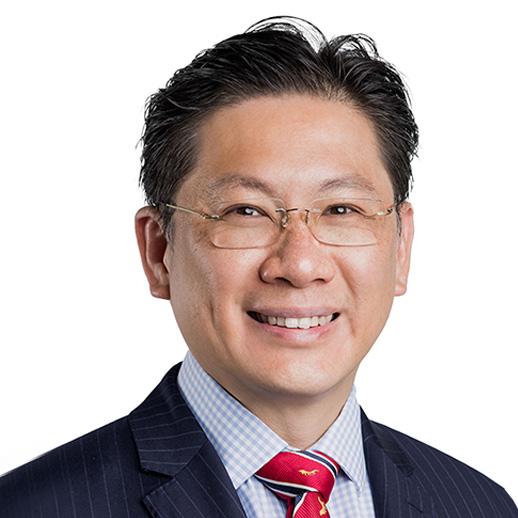
"Patients may experience shortness of breath on mild exertion, as well as difficulty swallowing or eating,” General Surgeon Dr. Edward Cheong explained. “There is also the worry of a malignant transformation of the giant leiomyoma. So, if possible, it is best to remove the giant leiomyoma.”
After getting her diagnosis, Nancy wasted no time in consulting a few surgeons, both in private and public medical institutions, to better understand her condition as well as available treatment options.
“The contrasts were striking—from the access sites (abdomen or chest) they would use to remove the tumor, to whether an esophagectomy was necessary, and even how I would be fed after surgery. Recovery timelines also varied greatly,” Nancy recalled, noting the variety of replies she got from different surgeons.
This made it challenging for her to determine which surgeon had the right approach for her. However, through these multiple meetings, Nancy developed a clearer understanding of her condition and the suitability of the surgeons.
Things started looking up for Nancy when she was introduced to Dr. Edward Cheong through a mutual friend at her church. She soon found out that Dr. Cheong had prior experience in treating cases like hers in the U.S. and the U.K., where he had introduced the use of specialised tubing (endovac) designed to make the complex operation a lot safer and more comfortable for the patient.
“For complex procedures that require repairing the esophageal lining, as is the case with Nancy due to her giant leiomyoma and the smaller satellite lesions surrounding her esophagus, I would use an endovac—an exudrain put on a wall suction system to remove blood and bodily fluids after surgery—to protect the site of esophageal repair after the procedure,” Dr. Cheong explained.
He added, “I designed this in the U.K. and brought it back to Singapore. I have been using this for esophagectomy and gastrectomy in high-risk patients.”
Aside from his medical expertise, Nancy was impressed by how understanding Dr. Cheong was.
“He didn’t just hear my words; he understood my fears, especially my anxiety about an esophagectomy. He treated me as a person, not just a patient, and gave me a sense of peace," Nancy shared.
"He reassured me, saying ‘let me do the worrying, while you prepare with trust.'"
“Nancy’s main concern was about how she wished to avoid an esophagectomy,” Dr. Cheong recounted. “Obviously, I was unable to give her a 100% reassurance that she would not need an esophagectomy due to the size of her esophageal leiomyoma, but I assured her I would try my very best to preserve her esophagus where possible, as it is critical for her quality of life and recovery.”
After consultations and preparations were complete, Nancy then underwent a left VATS procedure, a minimally invasive technique. Six keyholes were made in the left side of her back, near her seventh rib, to remove the giant esophageal leiomyoma. During the surgery, a part of her esophagus had to be repaired due to the tumor adhering to it.
According to Dr. Cheong, following her surgery, Nancy was walking and exercising just one day post-surgery as part of the Enhanced Recovery Programme. She also had a nasojejunal feeding tube inserted to keep her fed and was placed on a liquid diet five days post-surgery after her endovac was removed.
Patients can typically expect to make a full recovery one month post-surgery, especially if the procedure was done minimally invasively.
While staying in the wards, Nancy was impressed by her nurses’ approach to caring for her, describing it as both professional and deeply personal.
“They treated me not just as a patient but as someone they genuinely cared for."
Nancy recounted, “Because of that, my days in the ICU and Inpatient Suite were peaceful. I had the assurance that the team had my back, which gave me the freedom to simply rest, read, and recover with complete peace of mind; they walked the journey of recovery with me.”
It was not just the nurses who supported Nancy’s recovery; she also credited our herb garden as part of her recovery.
“I love nature and the herb garden encouraged me to retreat there for my morning walk, thus helping with my recovery,” Nancy said. She added, “Despite the major surgery I underwent, I would say my stay at Farrer Park Hospital felt more like a serene retreat than a hospital stay—a staycation where I could heal and reconnect with myself.”
While preparing for her surgery, Nancy had wrestled with not only mental fears, but also physical concerns.
Leading up to her procedure, not only did she face chest congestion and breathing difficulties due to the tumor, but she also suffered from a fall which led to an injury in her right hip. As her procedure required her to lie on her right side for hours, the nerves in her right hip and leg ended up being affected post-surgery.
Dr. Cheong’s advice to help Nancy with her affected nerve was to do daily brisk walking, or as he phrased it, “Walk, walk, walk!” Nancy attributes this daily cardio exercise, both as part of her prehabilitation and post-surgery workout, to having helped strengthen her lungs and built resilience.
“The principle of prehabilitation is to prepare the patient well before a major procedure – at least two to four weeks before their operation."
“It starts with ensuring Nancy got help and support from family, friends, and her church, and then we started her on simple cardiovascular exercises like brisk walking or exercise bikes for 30–60 minutes continuously," Dr. Cheong shared, elaborating on the points of prehabilitation he had Nancy undergo.
He continued, “For prehabilitation, it is important to eat a very healthy diet and in healthy portions. If you smoke, stop smoking as tissues do not heal well in smokers and you will be more susceptible to chest and wound infections. Be sure to take your multivitamins as well, especially vitamins C, D, B Complex, Zinc which helps with healing. Get iron supplements if you have iron-deficiency anemia.”
Post-surgery, Nancy expressed a renewed love for both life and her spirituality, rejoicing in and practising gratitude daily.
“Despite the rarity of this tumor, its benign nature gave me a new lease of life. I now look at life with renewed lenses—to rejoice and give thanks daily.”
Physically, she also feels lighter now that the tumor is no longer encroaching on her heart or lungs and causing her to struggle with chest congestion.
Even after having recovered from her procedure, Nancy remains grateful to the medical staff and doctors who treated and cared for her every step of the way.
“I can’t thank Dr. Cheong enough for walking through the valley with me, for being my cheerleader, my coach, and my steady presence,” Nancy noted. “In the weeks leading up to surgery and throughout recovery, Dr. Cheong became more than just my surgeon—he carried my fears, acknowledged them, and reassured me with clear, constant communication. His care and empathy left a lasting imprint in the hearts of my family and I.”
As for the nurses, Nancy added gratefully, “They were my anchors when fear and discomfort felt overwhelming, especially Nurse Camy from ICU and the nurses from Inpatient Suite 9 – Keddy, Mary Grace and Nurse Manager Ana. Their professionalism was matched by warmth—they didn’t just attend to my medical needs, they reassured me when I was anxious, comforted me when I was in pain, and gave me confidence that I was safe.”
The nurses’ dedication to caring for Nancy helped her feel seen, heard, and supported, which gave her the reassurance she needed to focus on resting and healing.
Reflecting on her journey, Nancy has this piece of advice, “Hold on to faith and courage. When faced with something rare or unknown, fear can feel overwhelming—but sometimes the reality may be gentler than we imagine."
"Find a surgeon who not only has the medical expertise but also the heart to walk with you emotionally and spiritually.”
She adds, “Surround yourself with a community who understands that healing is not only physical but also mental and spiritual. Most importantly, remember that recovery is possible. Each step—whether breathing exercises, walking daily, or simply resting—is progress. Share your journey when you can, because your story may be the encouragement someone else desperately needs.”