


There is usually a period of time spent between the day you are told you need surgery and the day it actually happens. During that window of time, most patients may spend it anxiously waiting for their surgery to arrive – pouring over information on their diagnosis, researching their options and managing their fears about what lies ahead.
However, that time is also a chance to do something useful and productive — to arrive at surgery stronger and more prepared for what’s to come post-operation, both physically and mentally. That, in essence, is prehabilitation.
It may not be a complicated concept, but the difference it can make to your recovery journey post-operation is increasingly well documented. General surgeon Dr. Edward Cheong explains what prehabilitation is, what it entails, and why it matters.
Surgical techniques have advanced significantly over the past few decades in terms of technology, anaesthesia, and postoperative care. Another aspect that is steadily gaining more attention is the recognition that the patient’s own preparation also plays an important role in preparing them for a physically demanding surgery.
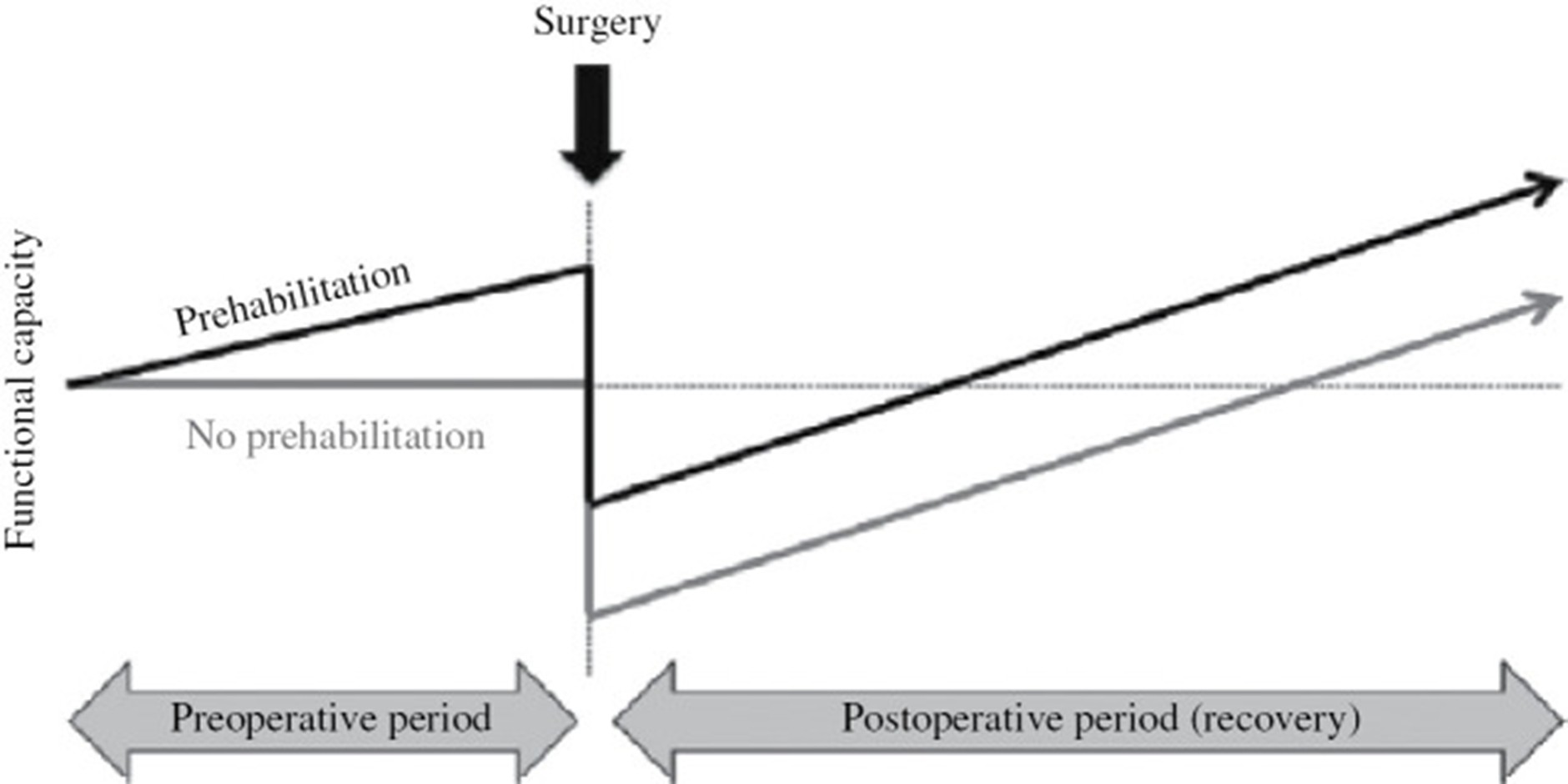
Prehabilitation is a structured programme, primarily based on a doctor’s advice to their patient, that consists of physical exercises, nutritional balance, and psychological preparation undertaken in the weeks leading up to a planned surgical procedure. It aims to improve your body’s functional capacity before surgery, so that it can better tolerate the physiological stress of the operation itself and recover more efficiently afterwards. It can be considered a preventive solution for further problems down the road.
“It pays off if patients prepare themselves better before the operation,” Dr. Cheong adds. “They do better, they heal better, there are fewer [post-surgery] complications, a shorter length of hospital stay, faster recovery, and they get back to their normal activity of daily living sooner.”
Rehabilitation refers to the post-operative work patients do to regain strength and bodily function after surgery. Prehabilitation applies the same logic, just in reverse. Rather than rebuilding your body’s capacity after it has been depleted by surgery, you build it up in advance so that there is more capacity to lose and more to draw on during your recovery.
Prehabilitation sits under the pre-operative pillar within a broader framework called ‘Enhanced Recovery After Surgery’ (ERAS) — a multimodal care programme that combines pre-operative, intraoperative, and post-operative strategies to reduce surgical complications and accelerate return to normal function.
Even when it is performed with the utmost technical skill, surgery is still a controlled form of physiological trauma that places significant demands on the body. During recovery, you are working to bring your body back to its baseline state.
As such, the depth of that baseline state before you enter surgery matters. A patient who enters surgery with strong cardiovascular fitness, adequate nutritional status, and a suitably robust muscle mass has greater physiological reserves to withstand the stresses of surgery and more resources to draw on during recovery.
A patient who does not prepare for surgery through prehabilitation may face a harder recovery, not because the surgery was more difficult, but because their body had less to work with from the start.
Every surgical patient can benefit from some form of pre-operative preparation. However, the impact of prehabilitation will be greatest in patients whose baseline physiological reserves are lowest, as they will have the most to gain from improvements before surgery.
Prehabilitation works by targeting several interconnected aspects of physical and psychological readiness simultaneously. It encompasses four main pillars, and on their own, each pillar is able to affect surgical outcomes, but there is a synergistic effect of improving a patient’s physical and mental condition through a multimodal approach.
Cardiovascular fitness is the most directly measurable predictor of surgical resilience. If you are able to perform aerobic exercises without significantly straining yourself, you will be better able to handle the anaesthetic, positioning and post-recovery respiratory demands of major surgery than those who cannot.
At least half an hour of sustained moderate-intensity cardiovascular exercise is recommended to build up your cardiac and respiratory capacity. Brisk walking is the most accessible form of exercise for patients, as is also one Dr. Cheong recommends most consistently, having seen its positive effects across patients of varied ages and fitness levels.
“I recommend my patients do 30 to 45 minutes of brisk walking per episode and for them to try and do this every day,” Dr. Cheong notes.
The exercises you do do not need to be elaborate. You can exercise by simply walking daily, building on the duration you spend walking over time, and maintaining its intensity. For patients with existing cardiovascular conditions or significant deconditioning, you can work with your physiotherapy team to design an individually tailored programme that achieves the same aims safely.
Various aspects of surgery can take a toll on your body’s metabolic system, from wound healing and immune function to the inflammatory response that accompanies recovery. They all require adequate protein and nutrient availability.
Protein intake is important to take note of during prehabilitation as muscle preservation and repair are protein-dependent processes, and patients, particularly older adults, those with cancer-related weight loss, or patients with chronic conditions affecting appetite, may be protein-insufficient at their baseline. A dietitian will assess your pre-operative nutritional status and suggest dietary modifications, oral supplements, or, in special cases, pre-operative feeding support.
Some nutrients Dr. Cheong highlights are vitamin C for collagen synthesis and boosting immune function, vitamin D for immune modulation and muscle function, and zinc for wound healing and immune response. A simple blood test before surgery will be able to help identify deficiencies and give you time to correct them in the weeks before the procedure.
Two major lifestyle factors that have emerged from surgical evidence as having a disproportionate impact on post-operative outcomes are smoking and alcohol consumption. Both are modifiable factors, and even a short period of cessation before surgery can make a big difference.
Smoking causes your blood vessels to constrict, resulting in impaired tissue oxygenation from the body’s reduced oxygen-carrying capacity. It also suppresses your immune system and slows collagen production, which is beneficial to wound healing. Smoking is associated with an increased risk of surgical site infection, wound disruption and post-operative pulmonary complications.
The good news is that even just a month or two of smoking cessation before surgery reduces these risks substantially. Airway function begins to recover within days of stopping, tissue oxygenation improves, and immune suppression associated with nicotine also begins to reverse. Though four weeks of cessation will not be the same as never having smoked, it is still preferred to operate on a current smoker.
For those who consume alcohol, pre-operative cessation or reduction reduces the risk of post-operative complications such as wound infections, bleeding, and delirium. Patients should discuss their alcohol intake honestly with their surgical team so appropriate support can be arranged.
Surgery is without a doubt a stressful procedure. From anticipating going under anaesthesia to the uncertainty of the surgery’s outcome, all of these can weigh heavily on a patient’s mind, activating stress hormones that suppress immune function, impair sleep and may also reduce the motivation to engage in the physical components of prehabilitation.
Dr. Cheong notes that anxiety and stress are common before an operation, and recommends that patients build a support system of family and friends that will offer them support in the days leading up to their surgery. A patient who feels isolated, frightened and unsupported may be less likely to exercise consistently, less likely to eat well and less likely to engage in pre-operative processes as an active participant rather than a passive recipient.
Psychological preparations also include honest, thorough conversations with the patient’s surgical team on what they can expect before, during and after the procedure. Patients who understand the recovery journey experience less post-operative anxiety, and it is itself a therapeutic intervention.
The minimum effective window for prehabilitation is two to four weeks before surgery. That allows for sufficient time to see measurable improvements in cardiovascular fitness with regular exercise, to correct nutritional deficiencies and to recover from the effects of smoking if the patient stops promptly.
If a longer lead time is possible, for procedures such as planned cancer surgery, joint replacement or major abdominal reconstruction, a longer prehabilitation period of six to eight weeks allows patients to have more substantial improvements, particularly in cardiovascular fitness and muscle mass.
The success of an operation is not determined solely in the operating theatre. It is also influenced by the choices made in the days and weeks beforehand. While no amount of preparation can eliminate the physical demands of surgery, improving your fitness, nutrition, lifestyle habits, and mental readiness can help your body cope with the stress of the procedure and recover more effectively.
Not every patient will require a formal prehabilitation programme, but every patient can benefit from taking an active role in preparing for surgery. Whether it's building the habit of a daily walk, improving your diet, stopping smoking, or addressing concerns with your healthcare team, small changes made before surgery can have a meaningful impact afterwards.
If you are scheduled for a surgical procedure, speak to your surgeon about how you can optimise your health before your operation. Prehabilitation should ideally begin the moment surgery becomes part of your treatment plan.