
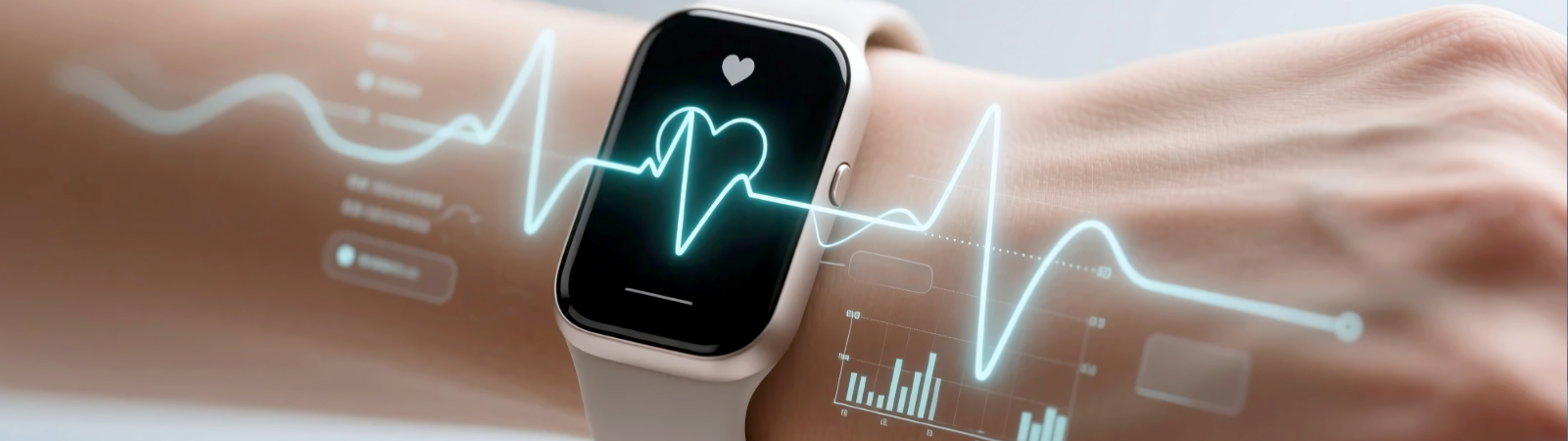

Smartwatches have evolved far beyond simple fitness trackers. Today’s devices can monitor heart rate, record electrocardiograms (ECGs), track oxygen levels, and even alert users to potential heart rhythm abnormalities. These features have transformed wearable technology into valuable tools for personal health monitoring.
However, as these alerts become more common, many users find themselves dismissing notifications without giving them much thought. While not every alert signals a serious problem, understanding what your smartwatch is detecting and knowing when to seek medical advice can play an important role in protecting your heart health.
Cardiologist Dr. Pipin Kojodjojo shares why smartwatch heart health alerts should not always be ignored and explains the growing prevalence of atrial fibrillation (AFib) in Singapore.
One of the most common misconceptions is that heart rate and heart rhythm are the same thing. In reality, they provide different information about your heart health.
Heart rate refers to the number of times the heart beats per minute, while heart rhythm refers to the pattern and regularity of those beats. A person can have a normal heart rate but still have an irregular rhythm.
“The heart rate is the number of times your heart beats per minute,” Dr. Pipin explains. “But your heart rhythm needs to be regular. You could also have 60 beats a minute, but an irregular rhythm. Each will tell us different things about your heart health because different conditions cause different changes either in the rhythm or in the rate.”
This distinction is important because smartwatch notifications may be related to either an abnormal heart rate or an irregular heart rhythm, each of which may point to different medical conditions.
According to Dr. Pipin, not all smartwatch health metrics are equally accurate.
Measurements such as heart rate, oxygen saturation and ECG recordings are generally considered to be reliable because they are captured directly by sensors within the device.
“The ones that smartwatches directly measure are actually very accurate,” he notes. “I encourage my patients with heart rhythm problems to use them.”
While a single notification from your smartwatch may not be cause for concern, recurring alerts should not be ignored.
“If you consistently get notifications, like the watch keeps telling you something is wrong, you should take them more seriously,” Dr. Pipin advises.
He notes that alerts become particularly important when they occur together with symptoms such as dizziness, breathlessness, excessive sweating, feeling faint, or a general sense of unwellness.
“When the notification comes and it's associated with you not feeling so well, that's also a sign that probably the watch is detecting some abnormal signals from your body and you should probably pay attention and try to figure out what's happening."
Many modern smartwatches allow users to perform an ECG when an abnormal rhythm alert appears. This can be extremely helpful because some heart rhythm disorders occur intermittently and may not be present by the time a patient visits a doctor.
“Not all irregular pulses are due to AFib,” Dr. Pipin notes. “The next thing one should do is record an ECG as soon as the notification appears because it provides documentation of what your heart rhythm is doing at that moment.”
These recordings can be stored on your smartphone and shared directly with your healthcare provider for review.
“That allows you to show it to your doctor and say, ‘Hey, I had this notification and I recorded an ECG.’”
In some cases, recordings from approved devices may provide sufficient evidence for a diagnosis.
“For some of these devices which are HSA-approved, the documentation on it is enough to confirm the diagnosis of your heart rhythm problem so we don't have to catch it again with an ECG in clinic or do a Holter test because you already have proof of the condition that you have.”
One of the most important conditions that smartwatches can help identify is atrial fibrillation (AFib), a common heart rhythm disorder that becomes more prevalent with age. AFib occurs when the upper chambers of the heart beat irregularly, increasing the risk of blood clot formation and stroke.
According to Dr. Pipin, AFib is becoming an increasingly significant health concern in Asia due to ageing populations.
"This is a condition that gets more and more common as we get older, so by the time we are above 80 years old, one in ten of us will have it."
Fortunately, AFib is not typically a condition people are born with. Instead, it usually develops over time as a result of ageing and other health conditions.
"You're more likely to get it as you get older," Dr. Pipin states. "The more comorbidities you acquire, things like high blood pressure, thyroid disease and diabetes, all these things increase your risk of getting atrial fibrillation."
He adds that the condition has serious consequences if left undetected.
“The biggest worry about atrial fibrillation is that it increases your risk of a stroke, and we know that stroke is the leading cause of disability in adults. It increases the risk of stroke by 500 per cent. A fivefold increase.”
Clinical experience suggests that wearable devices are already helping identify previously undiagnosed cases of AFib. In Dr. Pipin's clinical practice, patients often arrive with multiple ECG recordings captured by their smartwatch during episodes of abnormal heart rhythms.
“I have patients who are diagnosed based on their watch,” Dr. Pipin says. “They'll come in and say, ‘Hey, Doc, I was running and I got this notification. I did an ECG and this is what it showed.’ It's all recorded on their phone.”
These recordings can then be easily shared with healthcare providers for review, significantly streamlining the diagnostic process.
“From the first consultation, we already had their diagnosis, and we’ll tell the patient that this is happening, this is your condition and this is what we need to do to make things better.”
While some smartwatch measurements are highly accurate, others are estimates generated using algorithms.
One example is VO₂ max, a measure of how efficiently the body uses oxygen during exercise.
“What the watch measures is your heart rate, your oxygen percentage, and you have to key in your weight and your sex,” Dr. Pipin explains. “It is an extrapolation.”
In a medical setting, accurate VO₂ max testing requires specialised equipment that directly measures oxygen consumption and carbon dioxide production during exercise.
“If you want to do it for recreation, for fun, it's probably good enough,” he says. “But if you want to do it as an accurate measurement, then you have to do it properly.”
Although smartwatches can be useful tools, they should complement, not replace, healthy lifestyle habits and regular medical care. Dr. Pipin emphasises that the same measures that support overall cardiovascular health can also reduce the risk of AFib.
“Generally, anything that's good for your heart reduces your risk of AFib,” he shares. “Not being overweight, exercising, avoiding high blood pressure, avoiding diabetes. All these things actually improve your heart health.”
For smartwatch users, he offers one final piece of advice.
“If you're wearing a smartwatch and you get notifications that there's something wrong with your rhythm or your rate, please do an ECG because that really helps your doctor to find out what is happening.” As wearable technology continues to evolve, these devices are becoming valuable partners in healthcare. While they cannot replace professional medical evaluation, they can empower individuals to take a more active role in monitoring their health. Paying attention to persistent alerts and seeking medical advice when needed may help identify serious conditions such as AFib earlier, when treatment is often most effective.