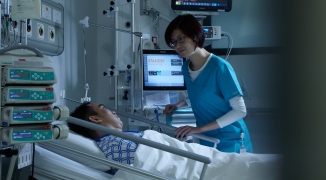
When a patient's condition requires more than a hospital ward can offer — continuous monitoring, ventilator support, invasive haemodynamic management, or the immediate availability of critical care interventions at any hour — the Intensive Care Unit (ICU) is where that care is delivered.
Farrer Park Hospital's ICU on Level 5 operates around the clock, every day of the year. It is designed to manage patients with severe or life-threatening conditions arising from surgery, cardiac events, neurological emergencies, complex medical illness, and serious infection. The unit is staffed by trained critical care nurses and supported by intensivists and specialist physicians, with direct access to the Major Surgery Suite, Cardiovascular Suite, and diagnostic imaging without patient transfer to another floor.
For patients planning major surgery at Farrer Park Hospital, the ICU represents a critical part of the clinical infrastructure — the safety net that allows complex, high-risk procedures to be undertaken with the confidence that post-operative critical support is immediately available. For families of patients admitted urgently or transferred from overseas, it is where that support is delivered, in a facility designed around both clinical safety and the needs of patients who are at their most vulnerable.
The physical design of an ICU is not incidental to how well it functions. Room layout, air pressure systems, nursing station positioning, and the integration of clinical information systems all have direct effects on patient safety, infection control, and the ability of the team to respond quickly when a patient's condition changes.
The nursing station is positioned and configured to provide an unobstructed line of sight to all patient rooms. In a critical care environment, direct visual observation is a safety layer that technology alone cannot replace — a nurse who can see their patients without leaving their station catches changes that a monitor alarm alone may not catch in time. The nursing station design at Farrer Park Hospital's ICU prioritises this visibility as a foundational safety feature.
Each ICU room is equipped with a dedicated dialysis tap, enabling continuous renal replacement therapy (CRRT) or haemodialysis to be performed at the bedside without transferring the patient to a separate dialysis unit. This is clinically significant for critically ill patients whose kidneys are failing — in the ICU setting, the instability that makes these patients critically ill is also what makes transport to a dialysis suite potentially hazardous. Bedside dialysis capability eliminates that risk.
The ICU is equipped with integrated clinical information systems that capture vital signs, ECG data, and ventilator parameters in real time, recording and displaying them at the bedside and at the nursing station simultaneously. This continuous data capture supports trend analysis, early warning of deterioration, and the documentation standards required for complex critical care management.
Care in the ICU is by definition team-based — no single specialty has the knowledge base to manage every organ system simultaneously when multiple are failing. The clinical team in Farrer Park Hospital's ICU operates as a coordinated multidisciplinary unit, with specialist input from across the hospital available around the clock.
The ICU is overseen by intensivists — specialist physicians with dedicated training in the management of critically ill patients. Intensivists coordinate the overall care plan, lead multidisciplinary ward rounds, manage organ support decisions, and are the primary point of contact for family communication regarding a patient's ICU progress.
ICU nurses carry significantly higher training requirements and lower nurse-to-patient ratios than general ward nurses. In a high-dependency critical care environment, one nurse may be assigned to one or two patients simultaneously, providing continuous observation, medication administration, ventilator management, and response to changes in clinical status. The nursing team at Farrer Park Hospital's ICU is trained in critical care and perioperative medicine.
Depending on the patient's primary condition and complications, specialist input is provided by cardiologists, cardiac surgeons, neurologists, general surgeons, orthopaedic surgeons, respiratory physicians, nephrologists, infectious disease physicians, and other specialists as clinically indicated. In a private hospital setting, this input is provided by the patient's own specialist or by the on-call specialist in the relevant field.
Physiotherapists, respiratory therapists, clinical pharmacists, and dietitians contribute to ICU care for patients requiring ventilator weaning, early mobilisation, medication safety reviews, and nutritional optimisation. Early physiotherapy in the ICU — beginning as soon as a patient is haemodynamically stable — is now standard practice at evidence-based centres and is associated with shorter ICU stays and faster recovery of function.
One of the most clinically significant features of Farrer Park Hospital's ICU is its location. The unit sits on Level 5, directly adjacent to the Major Surgery Suite and the Cardiovascular Suite, and within the same floor as the Day Surgery Suite.
This proximity is not incidental — it is the result of deliberate planning. The time between a post-operative complication and the initiation of definitive treatment is one of the most critical variables in outcomes for surgical patients. An ICU located on a different floor, accessed via a general lift corridor, introduces transport delays and logistical friction at precisely the moment when neither is acceptable.
For patients who deteriorate in the ICU and require urgent return to theatre, the path is immediate — no cross-building transfer, no elevator queues, no re-preparation of a theatre on a separate floor. The same proximity applies in reverse: patients leaving the operating theatre who require ICU-level post-operative monitoring move directly to the unit with minimal time spent in transit.
Diagnostic imaging — X-ray, CT, and ultrasound — is available within the hospital to support ICU patients requiring imaging without extended transport from the unit.
Having a family member in intensive care is one of the most distressing experiences a family can navigate. The environment is unfamiliar, the monitors and equipment can be alarming, and information does not always arrive at the pace families need. This section is written for families who want to understand what is happening and what to expect.
| Visiting hours | 12:00 pm to 2:00 pm, and 6:00 pm to 8:00 pm daily. A maximum of two visitors at a time is permitted in line with infection control requirements. The nursing team can advise if a patient's condition makes visiting temporarily inadvisable. |
| What you will see | ICU patients are connected to multiple monitors, lines, and in some cases a ventilator. This looks alarming, but each line and device has a specific clinical purpose. The nursing team can explain what each monitor and device is doing when you visit. |
| Speaking to the Team | The intensivist or treating physician conducts a ward round, typically in the morning. Families can request an update from the nursing team at any time during visiting hours. For urgent medical updates outside visiting hours, contact the ICU directly on +65 6705 2928 or 2929. |
| Infection control | Hand hygiene on entry is mandatory. Personal protective equipment — gloves, mask, gown — may be required for rooms with isolation precautions. The nursing team will brief you before you enter a room with special precautions. |
| Patient communication | Many ICU patients, even if sedated or ventilated, may be able to hear. Talking calmly to a patient, using their name, and providing familiar sensory input — a hand to hold, a familiar voice — is encouraged and has measurable therapeutic value. |
| Discharge from ICU | When a patient no longer needs ICU-level monitoring and support, they are stepped down to a high-dependency unit or a private inpatient suite on levels 7–10. This is a clinical decision made by the intensivist and treating specialist — it reflects improvement, not abandonment of care. |
| International families | For families who are not in Singapore, regular updates can be provided by the clinical team via telephone. Our international patient coordinators can facilitate communication, arrange accommodation for family members travelling to Singapore, and coordinate documentation for medical and insurance purposes. |
When evaluating a private hospital for major surgery or complex medical treatment, the ICU capability is one of the most important and least-discussed factors. Most hospital websites describe the operating theatre or the private rooms. Few are specific about the critical care infrastructure that sits between those two — the safety net that determines what can be done when things do not go to plan.
Contact: (65) 6705 2928 / (65) 6705 2929
Location: Level 5
Operating Hours: 24-hours
Visiting Hours:
• 12 p.m. – 2 p.m.
• 6 p.m. – 8 p.m.